Auricle
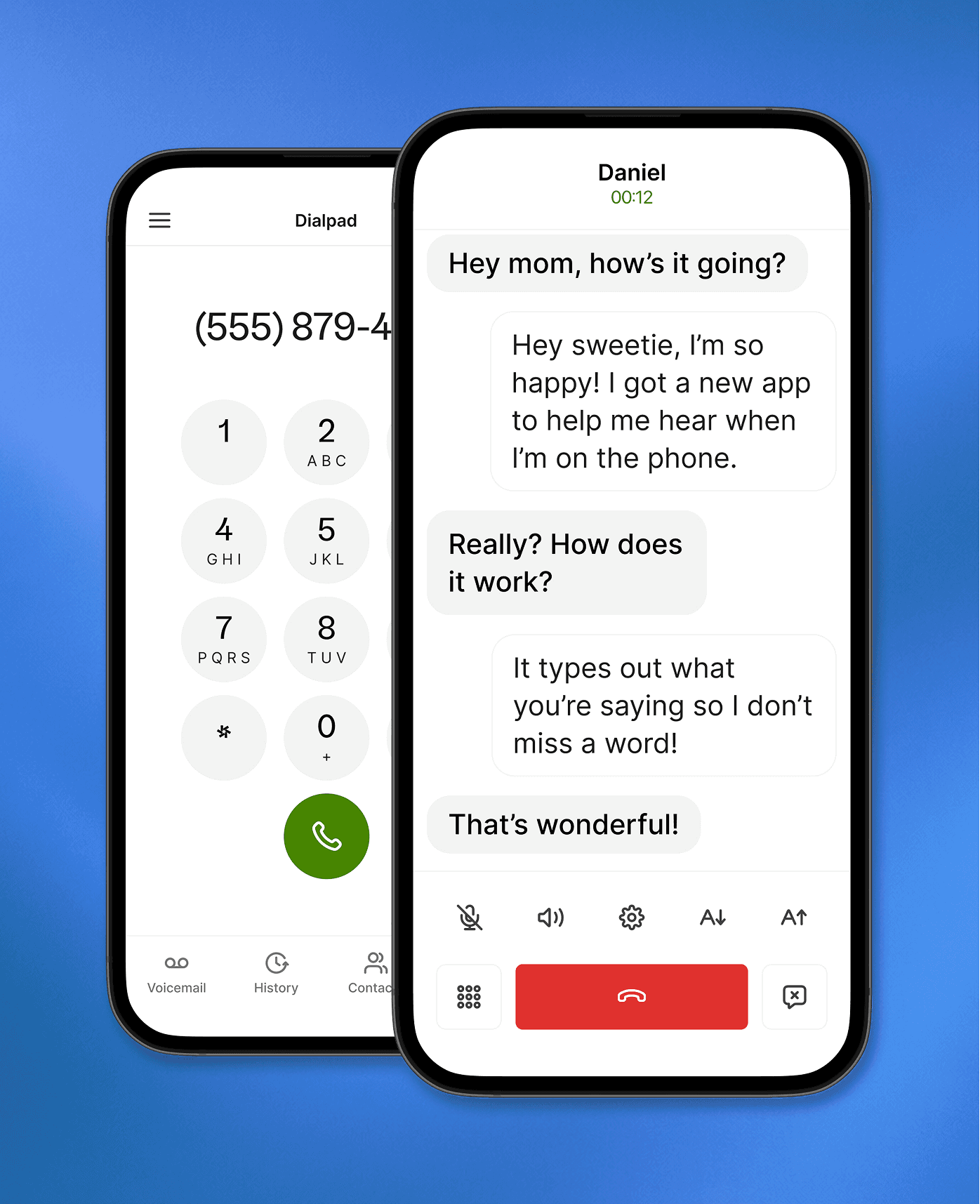
Auricle was the API platform that powered CaptionCall Mobile, CaptionCall VoIP, and CaptionCall Nexus, managing real-time telephony, AI captioning services, and data systems.
Features
Real-time call routing and audio handling across the VoIP telephony stack (SIP registration, PSTN connectivity, RTP media processing)
Live captioning pipeline routing call audio to speech-to-text processing and streaming captions back to the app in real time, with failover across multiple providers
Data platform syncing user, billing, and verification records to internal systems and data lakes via automated ETL pipelines
Push notification and voicemail dispatch for call and account events
Centralized monitoring and debugging tooling across the full call-relay pipeline
Challenges
Voicemail system (Vodia) failing to scale with user growth, driving churn and falling app store ratings as captioning reliability degraded
Hard-deadline data pipeline migration required to meet the TRS-URD compliance transition, no flexibility on timing
Executive-backed push to migrate to a new captioning provider for six-figure monthly savings, despite vendor benchmarks not capturing real usability gaps
Captioning servers had no load balancing across the pool; an overloaded instance had no failover path and would degrade until it lagged out and crashed, causing outages during peak usage hours
Customer support and operations pushed for a fully automated backend endpoint to replace the existing verification/scrubbing workflow, competing for engineering time against the captioning server reliability issue
Key Decisions
Prioritized the TRS-URD data migration first, since it had a hard regulatory deadline with no flexibility on timing, ahead of two other high-pressure initiatives, while sequencing the voicemail (Vodia → Twilio) migration second based on measurable and worsening impact, active churn and declining app store ratings, over less time-sensitive work
Pushed the AI captioning provider migration to later despite executive and AI-department pressure and six-figure monthly savings, running internal user studies first since vendor benchmarks didn't capture real usability issues
Deprioritized building a fully automated backend endpoint for the verification workflow in favor of the captioning server load-balancing fix, since the existing process was functional, if less scalable, and not causing active harm, while the load-balancing gap was actively causing outages
Impact
98%+ of active users remediated to TRS-URD compliance and migrated to URD endpoint ahead of the FCC's hard deadline
Avoided shipping a degraded captioning experience for hard-of-hearing users by running internal usability studies
Improved SLA reliability by eliminating peak-usage outages in the captioning pipeline by resolving the load-balancing gap across the server pool